Thursday, 27 March 2014

Mavericks proves to be Apple's most popular Mac

Five months out, users running OS X 10.9 are driving 40% of Chitika's Mac Web traffic.

The report issued Thursday by Chitika Insights calls it "the power of free" -- a reference to the price Apple (AAPL) charged Mac users to upgrade to Mavericks, the latest version its flagship operating system.

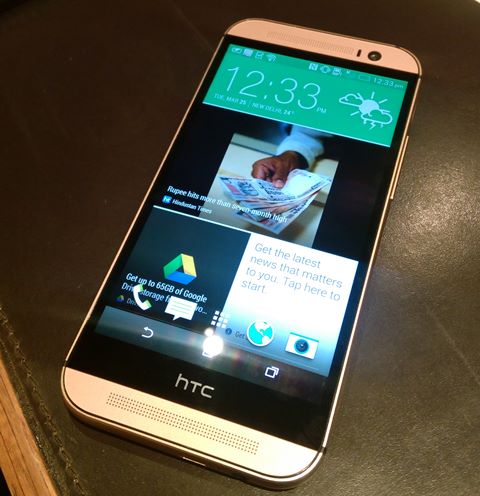
The Next biggie on block, HTC One M8 !

Think of the HTC One M8 as the big-budget sequel to an Oscar-winning indie film. Last year's HTC One won rave reviews and obsessed fans, but not enough customers to keep HTC growing. This year, HTC needs a rip-roaring box-office hit with its flagship phone.
It could happen. The One M8 is undeniably the most impressive handset the company has ever minted. Like its predecessor, the M8 brings a refined and beautiful software and speedy performance, all wrapped in a lithe and eye-catching aluminum skin.

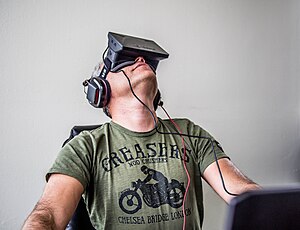
What is Oculus all about !

Step inside your favorite game.

Oculus Rift is a new virtual reality (VR) headset designed specifically for video games that will change the way you think about gaming forever. With an incredibly wide field of view, high resolution display, and ultra-low latency head tracking, the Rift provides a truly immersive experience that allows you to step inside your favorite game and explore new worlds like never before.

Price slash on Z30 announced by Blackberry

The BlackBerry Z10 literally flew off the shelves following its price cut a few weeks back. Now, BlackBerry want to recreate the same magic with its 5-inch phablet the Z30 and has announced that the phone will now be available at an offer price of Rs 34,990. The price cut is about 10 per cent as the phone was selling for Rs 38,990 online.

Samsung Galaxy S5 coming to India by April 11

South Korean electronics major Samsung unveiled Galaxy S5, its flagship Android phone, in India. Priced between Rs. 51,000- Rs. 53,000, it will be available in the market from April 11.

"This smartphone is targeted at the working professionals with a hectic lifestyle and also at style-crazy people," Vineet Taneja, country head, IT and mobile division of Samsung India, told reporters on the sidelines of the launch.

He said the actual price of the phone will be announced April 11. The pre-booking for the product will start from March 29.

Tuesday, 25 March 2014

Sony to focus on it's own OS, not Wear for Smartwatch

Sony, one of the most fervent supporters of the Android platform, has said it won't be embracing the smartwatch version of the software that Google recently announced. Android Wear is a customized, trimmed-down variant of the mobile operating system intended to reside on wearable devices of various form factors — starting off with smartwatches — but Sony has taken the position that it will continue to focus on its own OS, while possibly being open to Android Wear down the line. Sony told CNET that it will "continue to work closely with Google as a key partner and continue to evaluate opportunities across a number of areas," even if most of the company's efforts will be focused internally.
The SmartWatch 2 that Sony introduced at IFA last year is actually the fourth generation of its smartphone companion device, with the software gradually evolving and maturing every year. It's therefore understandable that, at least for the present time, Sony would seek to continue building on the platform it already has rather than jumping aboard a whole new one, while leaving the door open to collaborate with the likes of Google which already has the support of other big names like Samsung, LG, Motorola, and HTC.

Meet the OS for New generation of Wearable Devices, Android Wear

There have been main reports that Google was working on their own wearable smartwatch, but it looks like the emphasis is on the ‘wear’ part as Google has announced Android Wear – Android based code designed to work in a wearable smartwatch.  Not a Google Smartwatch, but any developer that wants to use Android Wear in a watch that they develop…just like the Android OS for our beloved smartphones. So Far Motorola and LG announced they would soon launch Smartwatches powered by Android Wear.  The Moto 360, as its name suggests, is a round-faced watch with alerts and notifications and voice control using Google Now – one of the requirements to using Android Wear.  In stark contrast, the LG G Watch is more in line with the existing square/rectangle look.  Both manufacturers claim to be debuting these Smartwatches in 2014 and it looks like many others are jumping on board.
While Android Wear does include fitness features that will work with some fitness Apps – certainly the popular Android App, MyFitnessPal – and Google is also working on a fitness API that will automatically help Android smartphones to automatically detect motion and exercise routines and this could certainly be used for the watches as well. The biggest plus to the Android Wear has to be in the ability or necessity to use Google Now that operates a lot like Apple’s Siri.  As the video shows, being able to ask the watch to find a certain place or person or to answer a text by speaking into the watch is very exciting and functional.  Google has really been perfecting Google Now through their Glass project and in Android 4.4 KitKat.  As Glass has shown us, a wearable is where Google Now really can shine. Android Wear is available now for Developers to start designing or building their applications with wearables in mind.  The new section that Google brought up is under Android for Developers and you can download a preview and learn more about the SDK.
Based on the video below, it looks like the leaked images we saw last year were very close to the actual product.  Please let us know as comments if this could be the type of product that would make you go out and purchase a wearable smartwatch – it is a lot like having Google Glass on your wrist without the benefit of a camera.  To be able to speak to the device and receive immediate feedback may be the thing that pushes me over the edge to finally make a purchase.

Sneak Peek of what's in dev for Moto 360 based on Android Wear

The biggest bombshell this month by far was the sudden unveiling of Google’s wearable platform, Android Wear. The excitement that followed into the next day was nothing short of explosive, and it seems the Moto 360 smartwatch that was announced alongside the platform has gained quite a lot of attention from developers and enthusiasts alike. So much attention, in fact, that there are now dozens of mock ups for apps and notifications of every description depicting what users and developers are hoping to see from the platform.
Google’s Android Wear announcement included a sneak peek at the SDK that would be included when the platform actually launches this Summer. While incomplete, it offered a glimpse into what Google has planned for this platform.

What we’ve learned from it so far is that Google has built this to act as an extension of your Android phone. All of your notifications, and the way you normally interact with them, are available on the watch in a totally new UI. Outside of this, Google has hinted at things like Chromecast control, voice control for third party devices, and a more complete version of Google Now to interact with. This has spawned more than a few concepts for apps and service, and while only a handful of them seem based in reality, they all seem to point to a ravenous desire to see the platform take shape.

Curiously, nearly all of the UI mockups that have been shown off so far are for the round Moto 360. Google’s platform at launch will support two form factors, round for Motorola and square for the LG G Watch. Google has explained that the core of the Android Wear UI makes it so there are very few differences between the two shapes when designing content for the watch, but the community has clearly leaned heavily towards the sleek round look of the Moto 360.
While it’s unlikely that we’ll be playing Flappy Bird or practicing our speed reading through an app on our smartwatch without needing to recharge the battery in 10 minutes, most of these concepts have the potential to be real things Android Wear is capable of at some point in the future.

Jony Ive reveals lesser known facts from iMac to iOS7


When it comes to Apple’s product be it the iPhone or iPad or the iPod, two names stand out. One is, of course, Apple’s co-founder Steve Jobs, while the other is Apple’s Senior Vice President of Design, Jonathan ‘Jony’ Ive.
No new product launch is complete is without a video of Ive discussing at length, the concept that went into the design of the new product, though there was quite a lot of jokes were made at his expense soon after the redesigned iOS 7 was unveiled. But nevertheless Ive has left a great mark on Apple.

In an in-depth interview to Time magazine, a rare insight into Ive, he discussed what design means to Apple, his working relationship with Jobs, and much more. For Apple fans and fans of Ive’s work, which includes more than just Apple products, the interview is a must read. You can check out the complete in-depth interview here. 
The interview talks about how Ive came to work at Apple. He initially took a few classes in car-designing in London, but left midway. “The classes were full of students making vroom! vroom! noises as they drew,” he told the magazine. He then studied industrial design at Newcastle Polytechnic.  Soon after design school he started working at Tangerine, a design agency which he left in 1991 to join one of its client Apple. 
Ive joined Apple, before Jobs had returned to the company. Once Jobs, returned, Ive recalls, “Steve and I spent months and months working on a part of a product that, often, nobody would ever see, nor realize was there. It didn’t make any difference functionally. We did it because we cared, because when you realize how well you can make something, falling short, whether seen or not, feels like failure.”
When asked if the rumours about Jobs being a tough person to work with are true, Ive is diplomatic. He said,“So much has been written about Steve, and I don’t recognize my friend in much of it. Yes, he had a surgically precise opinion. Yes, it could sting. Yes, he constantly questioned. ‘Is this good enough? Is this right?’ but he was so clever. His ideas were bold and magnificent. They could suck the air from the room. And when the ideas didn’t come, he decided to believe we would eventually make something great. And, oh, the joy of getting there!”
As far as Ive and his design team are concerned, they remain elusive and have only been seen once in public. Ive said the design team is small with around 15 people and that no one other than Ive and his team are allowed in their office, except, of course, top senior Apple executives. “The reason is, it’s the one place you can go and see everything we’re working on — all the designs, all the prototypes.”
 And how long does a typical Apple product take? Ive spent “months and months and months” working out the exact shape of the iMac stand.  And even when he is done with a product, he wonders if he could have done it better. “It’s an affliction designers are cursed with.”
Ive doesn’t see himself as just another designer but more of a maker as the interview points out. He spent a good part of his childhood taking things apart. “Complete intrigue with the physical world starts by destroying it,” he said.
Ubuntu on Mac, A new wave of Speed

Valve has been saying that, when properly optimized, games run faster on Linux than on Windows. Granted, the company hyped Linux — most notably, Ubuntu — for quite some time because its upcoming Steam Machine was set to use Linux as its operating system of choice, as Valve tried to forego Windows.
Regardless of Valve’s seemingly incessant Linux-based claims and pleas, the majority of the gaming world didn’t care very much, mainly because of Linux’s limited gaming library — it doesn’t matter if games run faster on Linux if there are no games on Linux. Now, though, a new experiment carried out by Michael Larabel of Phoronix has found that if you install Ubuntu 14.04 on a MacBook, the gaming performance of the computer drastically increases.

How drastic is the increase? One game – OpenaArena, a popular Quake-like open-source arena-based shooter — ran at a low 20 fps on OS X 10.9.2 at a resolution of 1366 x 768, but on Ubuntu 14.04, ran at 137 fps at the same resolution. Interestingly, another open-source first-person shooter, Xonotic, initially ran better on OS X than Ubuntu 14.04 at its lowest settings by about an extra seven frames-per-second. However, on medium and high settings, Ubuntu 14.04 topped OS X to the tune of between 20 and 30 fps.
However, this is the computing world — full of many different configurations and ghosts in machines — and not everything is universally better on comparable hardware and software. Nexuiz, yet another open-source first-person shooter, managed about 37 fps at a resolution of 1366 x 768 on OS X, but dropped to about 25 fps on Ubuntu 14.04 at the same resolution.
OS X isn’t ideal for gaming — something that the gaming world has known for quite a while. However, the surprising bit is that simply installing another non-Windows operating system on your MacBook can significantly increase its gaming capabilities. Unfortunately, attempting to game with Linux’s library as your only resource means you’ll be running out of options sooner rather than later, but it may be a good way to breathe new gaming life into older hardware.


Spied :: Apple has an iPad stylus in the works ::

Despite several very public statements against the concept, it looks like Apple has explored the idea of using a special kind of stylus with the iPad.
The evolution of capacitive touchscreens has done a lot to reduce our reliance on a physical input device in exchange for fingers. Unfortunately, we’ve reached a point with pixel density and screen size in tablets where a new kind of stylus may be necessary for new features.
A patent has arrived that describes an interactive physical device with replaceable nibs that allow for everything from painting to precision input and handwriting.

apple-styuls-patant
There have been several tablets in the last few years to attempt stylus input, and all of them have missed the mark in one way or another. Microsoft’s pen input for the Surface comes the closest to a complete thought, save for an abysmal software keyboard that could also be used for handwriting recognition. While the handwriting recognition was fantastic, the rest of the experience was incredibly poor.
Samsung has included a passive stylus in the Galaxy Note line that allows for handwriting recognition and OS input as well, but it’s a small plastic stick that is uncomfortable to use for any real length of time. Based on the information available, it looks like Apple is trying to find a solution in order to address some of these and other issues.

The patent describes an input device with accelerometers and other sensors to interact directly with the tablet, as well as replaceable nibs that serve multiple functions. Some of these nibs will be simple interaction points, while others will resemble the top of a paintbrush and give off light as they interact with the tablet. This means the stylus could be used for everything from games to painting and, with any luck, handwriting recognition.

Facebook on Takeover spree, Adds Oculus VR for $2 billion

Facebook just threw two billion bucks at Oculus VR and now owns the Oculus Rift. Some of us, however, are ecstatic to report that John Carmack now works for Facebook because we’re fans of extremely funny situations.
The two billion dollar sum is composed of $400 million in cash and 23.1 million shares of Facebook common stock. In a post reporting the news, Mark Zuckerberg himself notes that, for now, Facebook will allow Oculus to operate independently and remain focused on gaming; however, in the future Facebook will bring the Oculus Rift into many other arenas. Zuckerberg specifically quoted having a face-to-face consultation with a doctor on the other side of the world, or enjoying court-side seats at a sporting event without actually having to pay for a full-price ticket.


This could, obviously, go either way for the Oculus team. On the one hand, the Rift has been floating around as a development kit for almost two years — a company can only release so many dev kits before all excitement for a product has died down and it’s considered some form of vaporware. The optimistic would suggest that now, with Facebook’s staggering financial weight thrown behind the Rift, the Oculus team could progress at a much faster pace. The pessimistic — a stance that Twitter would have you believe has been taken by the overwhelming majority of gamers — would suggest that Facebook doesn’t care about gaming, and now will put the clamps on the Rift as a core gaming experience in order to focus on other applications.
Back at GDC this year, Sony showed off its own VR headset for console gaming, Project Morpheus, and the hands-on impressions from press at the show stated the kit was an impressive, comfortable, supremely functional piece of hardware, already rivaling the Rift. Oculus quickly and conveniently announced the final form of its dev kit. Considering Sony’s massive resources, it wouldn’t have been a surprise if the company could actually release the Morpheus before the Oculus Rift dropped. However, now that Oculus has Facebook’s massive resources at its disposal, the Rift could finally, finally drag itself out of the dev kit beta and prop itself up on store shelves.
For now, we’ll just have to wait and see if this acquisition bodes well for Oculus — and if John Carmack quits within the next couple of days.

Grid Interface to be added in Gmail for promotions


In a blog post on the official Gmail blog, Google has just unveiled a new design for the promotions tab within the web Gmail interface. The promotion tab was originally introduced last year when Google switched to a categorical tabbed design. Currently, the promotions section looks the same as the other categories within Gmail, but with this change, the design will switch from being list-based to a grid. instead of just subject lines, the grid view will pull in images from the email and make it easier to see exactly what the message is promoting. The grid view also makes it easier to scroll through a lot of messages by introducing infinite scrolling.

Promotional mail has a lot of images, from pictures of snazzy new shoes to photos of that rock-climbing gym you’ve been wanting to try. But right now, those images are buried inside your messages—and with only subject lines to go on, it can be a challenge to quickly pick out the deals and offers that interest you most. To help you find what you’re looking for faster, you can now sign up for a new field trial for Gmail that lets you view the Promotions tab in a more visual way.

To sign up for the grid view, head to g.co/gmailfieldtrial and if you’re selected, you’ll have the option to switch between the grid a list views with ease.

Process of creatng original iPhone revealed by Apple engineer Greg Christie

Apple made Greg Christie, one of its original iPhone engineers, available before yet another round of patent fights with Samsung, allowing Christie to further expand on the stories of the iPhone’s secretive development under then-CEO Steve Jobs in a report by the Wall Street Journal. While some of what Christie said isn’t new information, there are some interesting anecdotes near the end of his interview.
For example, in 2005—two years before the Apple went public with the iPhone—Christie’s team was responsible for planning how the device would look and work. When the team found itself floundering and unable to settle on how the phone should work, Christie was told that his team could either figure it out over the next two weeks or be moved to another project so someone else could solve the problems.

The article goes on to describe Steve Jobs’ growing excitement with the project and desire to manage it down to the last detail, the security and secrecy that went into the development process, and some of the user interface problems the team found themselves fighting to overcome—including what happened to the split-view Mail application Jobs was so proud of at the iPhone keynote.
You can read the full article on the WSJ website.